
I have, for the majority of my life, been a voracious consumer of books. But in the last few years, that consumption has dwindled precipitously. There are many things to blame for this sad turn of events--motherhood, online consumption rather than print, diminishing attention span. This year I vowed to read more and decided to keep a spreadsheet to track my progress. In addition to title, author, and a short summary, I kept data on multiple categories including book length, year published, and the gender, race, and ethnicity of the author. Since I doubt highly that I will finish another book before the end of the year (thanks Christmas!) I'm ready to report my year end totals and findings.
Total Books Read: 40
Total Pages Read: 12,706
Fiction: 27
Young Adult Fiction: 3
Non-Fiction: 9
Stageplay: 1
Written 2010-2016: 27
Written 2000-2009: 6
Written Before 2000: 7
Oldest: Written in 1926
Female Authors: 32
Male: 9
Americans: 30
British: 4
Irish: 1
Nigerian: 1
Pakistani: 1
Japanese: 1
Indian: 3
Favorite Books - Fiction
1. Jane Steele - Lyndsay Faye
2. Under a Painted Sky - Stacey Lee
3. Americanah - Chimamanda Ngozi Adiche
4. The Martian - Andy Weir
5. Aristotle and Dante Discover the Secrets of the Universe - Benjamin Alire-Saenz
Favorite Books - Non-Fiction
1. Alexander Hamilton - Ron Chernow
2. When Breath Becomes Air - Paul Kalanithi
3. The Price of Motherhood - Ann Crittenden
4. Between the World and Me - Ta-Nehisi Coates
5. Modern Romance - Aziz Ansari
Least Favorite Book: Fates and Furies
Movie that was actually better than the book: Brooklyn
Best Guilty Pleasure Read: The Suffragette Scandal
Favorite Re-Read: The Blue Castle by LM Montgomery
So what are your favorite books that you read this year?
Showing posts with label books. Show all posts
Showing posts with label books. Show all posts
Wednesday, December 21, 2016

Monday, October 29, 2012
On Being an Introvert
I am an introvert; I hope this does not come as a shock to
anyone. Reading a book is as necessary to me as breathing air. I crave alone
time. I enjoy discussing difficult topics with thoughtful and respectful
thinkers. I like to stay home where my environment is comfortable and familiar.
I live, quite happily, within my head.
And all my life, I have thought this was the wrong way to be.
See, we live in a world that favors extroverts—in all their
gregarious and socialable glory—over the quiet observer. Every summer, as the
new school year approached, I would meticulously arrange my back-to-school
outfits and vow to God and my teddy bear Nick, that this year—this year!—was the year that I would be
fun and outgoing and make new friends. I desperately wanted to be called “the
life of the party” (whatever that means)
and I secretly, fervently dreamed that I would nominated for the Homecoming
court. (Delusional is also a good word for this particular pipedream.)
Making friends, opening up to people...this was a tortuous
process for me, fraught with self-doubt and disillusionment in my own worth. The
sad reality is that I actually love to meet new people, to learn their stories
and discuss their dreams and to connect as human beings. I just didn’t know how
to achieve this without wading through small talk and mild pleasantries.
In Korea, a woman in our knitting group, a classic extrovert,
was distraught over how to deal with her extremely introverted daughter. As we
knit, my friend Kathryn, a wise introvert, would share how she felt and thought and
dealt with her introvertness. It was the first time that I had ever realized
that I was not alone in my experiences, and it gave me comfort.
I read a book last week, Quiet:
The Power of Introverts in a World That Can’t Stop Talking and it changed my life. Susan Cain, the introverted author, exposes the benefits and
beauties of being an introvert in a world that favors—rather unfairly—extroverts.
For the first time, I felt that being an introvert was something of great power
and purpose; a defining characteristic that gives me worth.
Most empowering—at least to me—was her determination (and much
research backs this up) that introverts are not anti-social misanthropes, but rather,
we are what are called “high reactives.” Unlike most extroverts, we have strong
reactions to strange, loud, crowded or unfamiliar places. We are disoriented by
social situations—not because we don’t like to be social, but the environment
in which we are often forced to be social is distracting and disorienting. We
favor intimate, familiar social settings, smaller groups, where we can have in-depth
conversations that skip all the silly small talk that drives most introverts
insane.
Understanding this, and recognizing that most introverts
feel this way, has been very helpful to me. It’s changed the way I perceive
social situations and how I prepare myself to interact with people.
But best of all….I have stopped feeling that just because I’m
an introvert, I’m not as worthwhile a person as an extrovert. In fact, I love
myself more now because I am an introvert.
And that feels pretty good.
I highly recommend reading Quiet or at the very least, check out Susan Cain's TED Talk from this past March:
Saturday, April 4, 2009
More Books, Week Two
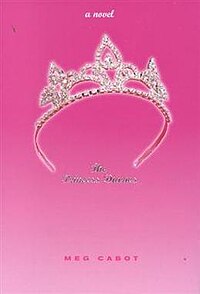
So. Last week, I read a lot of Shannon Hale. In addition to the two books I mentioned last week, I also read Enna Burning which I did not enjoy as much as the others. I still have River Secrets sitting on my bookshelf, and perhaps I'll get to it later. This week I've continued on my YA kick and turned to a new author, Meg Cabot. I was talking to a co-worker of sorts about my new YA fiction addiction (hah! that rhymes!) and she mentioned that I should read Meg Cabot. I'd heard of her, of course, so the next day I went to the library and picked up the first two volumes of the Princess Diaries.
A brief interlude. I must at this point admit my particular fondness for Disney movies and/or "tween girl movies" like What a Girl Wants, A Cinderella Story, Sisterhood of the Traveling Pants and yes, even The Princess Diaries starring Anne Hathaway. What can I say? I've got a sixteen year old girl living inside me somewhere. (Though if the YA books I've read lately are any indication, my 16 year old self has a much better vocabulary than most.) I loved the movie, so I should love the book, right?
Usually, I always say that the book is better. Well, I've recently read a string of books that have made me recount that statement. I'm not saying that it's a bad thing, necessarily, since the book and the movie often end up being very different creatures and are hardly comparable. (Take, for instance, The Count of Monte Cristo by Alexandre Dumas, which I love, and the movie starring Jim Caveziel, which I also love and which have absolutely nothing in common except for France and the characters' names.) I wonder, also, if seeing the movie first prevents me from liking the book as much as I would have if I hadn't had the movie to compare it to. For the record, movies I liked more than the books: Stardust, The Devil Wears Prada, Confessions of a Shopaholic and now, The Princess Diaries (TPD). But I can also safely put TPD in the category of books and movies which have very little in common.
This leads me to another brief detour: I like Disney. I like that Disney takes sometimes unpleasant and gruesome fairy tales and makes them happy. I like that they sugarcoat the world and create a feel-good environment. Sure, I'm normally on the side of strict literary integrity when it comes to movie adaptations but sometimes, you just want something upbeat and Disney can provide that. I like TPD movie for this reason. It's cute, it's charming, it's funny. There are no Sidecar drinking, cigarette smoking, domineering grandmothers in Disney's version of the Princess Diaries. Which is exactly the kind of grandmother (the ostensible queen of Genovia) that makes an appearance in the book. In Disney movies, this type of woman would be on the bad side.
Before I get ahead of myself, I should probably explain the brief plot points of the book for those who are not familiar with it or the movie. Mia Thermopolis, a freshmen at a private school in New York City (the movie is set in San Francisco), discovers that her father (who is still alive, but in the movie is quite dead), is actually not a minor politician in a small European country called Genovia, but is, in fact, it's ruler. And, Mia, his illegitimate daughter with an American painter, is now his sole heir since he can longer sire any children after a battle with cancer. Mia must now endure "princess lessons" with her domineering grandmere (the lovable Julie Andrews in the movie is not a single thing like this grandmother). Mia must deal with her new position in life and her title, all the while battling high school stereotypes, mean girls, and unrequited crushes....and the fact that her mother is now dating her algebra teacher.
The book is, like it's title su ggests, written from Mia's point of view, as if she were writing in her journal. Mia is at times selfish, self-aware, whiny, intelligent, frustrating, annoying, and delightful. Cabot's writing is, I think, very true to teenage girls but still leaves the reader a bit frustrated. (I kept thinking, "Did I REALLY do and say such stupid things when I was 14?") Despite its shortcomings, the Diaries is an entertaining and fast read. It's like a soap opera you can't stop watching. Which is why, against my better judgment, I read the second volume.
Once again, Mia writes about her struggles to accept her position as a princess, while dealing with her mother's unexpected pregnancy and marriage to her algebra teacher, a secret admirer, a primetime television interview and her still formidable grandmother. As usual, Mia's inner thoughts are a mixture of whining and whimsy as she deals with all this. But the more annoying thing is how quickly you can read these books and how instantaneously you fall right into the characters' worlds. I'm not kidding when I say it's like a soap opera you can't stop watching. And there are NINE volumes so far. Someone please stop me soon.
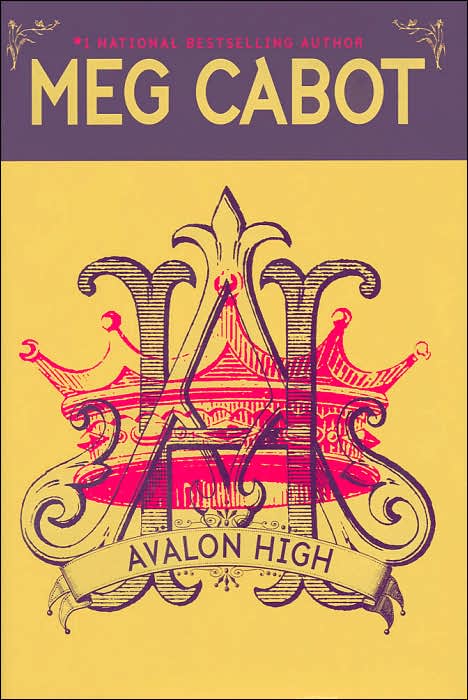
After reading the first two books in TPD series, I turned to another Meg Cabot book that my friend had recommended: Avalon High. Elaine "Ellie" Harrison moves with her parents (a pair of medieval scholars) from Minnesota to Annapolis, Maryland while her parents take a year long sabbatical to continue their studies in nearby DC. Her new high school, Avalon High, seems like a typical high school with the stereotypical students: Lance the jock, Jennifer the cheerleader, Marco, the bad boy/desperado, and Will, the senior class president, quarterback, and all around good guy. Eventually, it becomes apparent that Avalon High is a place where the ancient Arthurian legend is repeating itself. Will, Jennifer, Lance, Marco, and Mr. Morton all correspond to King Arthur, Queen Guinevere, Knight Lancelot, Mordred, and Merlin, respectively. If this is the case, then Will (as Arthur) is in danger of being killed by his half-brother, Marco. Ellie decides to take matters into her own hands and help Will and in the process, discovers something about herself that she never knew before.
Looking back, I realize it's a pretty shaky premise with a weak plot, but I still really enjoyed it, far more The Princess Diaries, in fact. The characters are fun and Ellie has a very distinctive voice (if similar to Mia's). I'd read it again. Then again, I'm a sucker for Arthur legends.
Now, lest you think I've completely abandoned adult works, I'm in the process of reading a biography of John Steinbeck, since I realized that I know very little about my favorite American author. It's a massive book (over a thousand pages) so it will probably be a few weeks before I come back with my review of that book.
But in the meantime, I'm wondering, are there other movies out there that you enjoyed more than the books? Do you like Disney movies? Do you have a secret love of YA books and films like me? It's okay....don't feel bad if you do. We can start a support group.
A brief interlude. I must at this point admit my particular fondness for Disney movies and/or "tween girl movies" like What a Girl Wants, A Cinderella Story, Sisterhood of the Traveling Pants and yes, even The Princess Diaries starring Anne Hathaway. What can I say? I've got a sixteen year old girl living inside me somewhere. (Though if the YA books I've read lately are any indication, my 16 year old self has a much better vocabulary than most.) I loved the movie, so I should love the book, right?
Usually, I always say that the book is better. Well, I've recently read a string of books that have made me recount that statement. I'm not saying that it's a bad thing, necessarily, since the book and the movie often end up being very different creatures and are hardly comparable. (Take, for instance, The Count of Monte Cristo by Alexandre Dumas, which I love, and the movie starring Jim Caveziel, which I also love and which have absolutely nothing in common except for France and the characters' names.) I wonder, also, if seeing the movie first prevents me from liking the book as much as I would have if I hadn't had the movie to compare it to. For the record, movies I liked more than the books: Stardust, The Devil Wears Prada, Confessions of a Shopaholic and now, The Princess Diaries (TPD). But I can also safely put TPD in the category of books and movies which have very little in common.
This leads me to another brief detour: I like Disney. I like that Disney takes sometimes unpleasant and gruesome fairy tales and makes them happy. I like that they sugarcoat the world and create a feel-good environment. Sure, I'm normally on the side of strict literary integrity when it comes to movie adaptations but sometimes, you just want something upbeat and Disney can provide that. I like TPD movie for this reason. It's cute, it's charming, it's funny. There are no Sidecar drinking, cigarette smoking, domineering grandmothers in Disney's version of the Princess Diaries. Which is exactly the kind of grandmother (the ostensible queen of Genovia) that makes an appearance in the book. In Disney movies, this type of woman would be on the bad side.
Before I get ahead of myself, I should probably explain the brief plot points of the book for those who are not familiar with it or the movie. Mia Thermopolis, a freshmen at a private school in New York City (the movie is set in San Francisco), discovers that her father (who is still alive, but in the movie is quite dead), is actually not a minor politician in a small European country called Genovia, but is, in fact, it's ruler. And, Mia, his illegitimate daughter with an American painter, is now his sole heir since he can longer sire any children after a battle with cancer. Mia must now endure "princess lessons" with her domineering grandmere (the lovable Julie Andrews in the movie is not a single thing like this grandmother). Mia must deal with her new position in life and her title, all the while battling high school stereotypes, mean girls, and unrequited crushes....and the fact that her mother is now dating her algebra teacher.
The book is, like it's title su
ggests, written from Mia's point of view, as if she were writing in her journal. Mia is at times selfish, self-aware, whiny, intelligent, frustrating, annoying, and delightful. Cabot's writing is, I think, very true to teenage girls but still leaves the reader a bit frustrated. (I kept thinking, "Did I REALLY do and say such stupid things when I was 14?") Despite its shortcomings, the Diaries is an entertaining and fast read. It's like a soap opera you can't stop watching. Which is why, against my better judgment, I read the second volume.Once again, Mia writes about her struggles to accept her position as a princess, while dealing with her mother's unexpected pregnancy and marriage to her algebra teacher, a secret admirer, a primetime television interview and her still formidable grandmother. As usual, Mia's inner thoughts are a mixture of whining and whimsy as she deals with all this. But the more annoying thing is how quickly you can read these books and how instantaneously you fall right into the characters' worlds. I'm not kidding when I say it's like a soap opera you can't stop watching. And there are NINE volumes so far. Someone please stop me soon.
After reading the first two books in TPD series, I turned to another Meg Cabot book that my friend had recommended: Avalon High. Elaine "Ellie" Harrison moves with her parents (a pair of medieval scholars) from Minnesota to Annapolis, Maryland while her parents take a year long sabbatical to continue their studies in nearby DC. Her new high school, Avalon High, seems like a typical high school with the stereotypical students: Lance the jock, Jennifer the cheerleader, Marco, the bad boy/desperado, and Will, the senior class president, quarterback, and all around good guy. Eventually, it becomes apparent that Avalon High is a place where the ancient Arthurian legend is repeating itself. Will, Jennifer, Lance, Marco, and Mr. Morton all correspond to King Arthur, Queen Guinevere, Knight Lancelot, Mordred, and Merlin, respectively. If this is the case, then Will (as Arthur) is in danger of being killed by his half-brother, Marco. Ellie decides to take matters into her own hands and help Will and in the process, discovers something about herself that she never knew before.
Looking back, I realize it's a pretty shaky premise with a weak plot, but I still really enjoyed it, far more The Princess Diaries, in fact. The characters are fun and Ellie has a very distinctive voice (if similar to Mia's). I'd read it again. Then again, I'm a sucker for Arthur legends.
Now, lest you think I've completely abandoned adult works, I'm in the process of reading a biography of John Steinbeck, since I realized that I know very little about my favorite American author. It's a massive book (over a thousand pages) so it will probably be a few weeks before I come back with my review of that book.
But in the meantime, I'm wondering, are there other movies out there that you enjoyed more than the books? Do you like Disney movies? Do you have a secret love of YA books and films like me? It's okay....don't feel bad if you do. We can start a support group.
Saturday, March 28, 2009
Books Reports, Week One
Since my sister, who has a master's in children's literature, came to visit this month, I've been on a huge young adult fiction kick. I love YA books because they are often (though, I've recently discovered, not always) clean tales with a moralistic outcome filled with colorful characters and interesting plots. I've read two YA book by Shannon Hale the past week that I've greatly enjoyed. I've read Shannon Hale's Austenland, an adult fiction tale of Austen obsession and found it moderately enjoyable for what it was, but I think Hale does much better with YA books, themes and fairy tale re-tellings.


Rounding out the books I read last week is Georgiana, Duchess of Devonshire, by Amanda Foreman. This biography was the inspiration for the recent movie The Duchess starring Keira Knightley (ick) and Ralph Fiennes. It's a very engaging biography of Georgiana Spencer, an ancestor of Princess Diana, who, at age, 17 become the Duchess of Devonshire when she married the Duke. Georginia was a fashion arbiter, amateur politician, hopeless gambler, and a friend to some of the most famous people of her time, including Charles Fox, Charles Grey, and the Prince of Wales (later George IV). Despite her beauty and social graces, she was largely unappreciated by her husband and took many lovers, including Charles Grey, the future British Prime Minister, while her husband had a long affair with their mutual friend, Bess. The Duchess was beset by many debts from her gambling addiction and her extravagant lifestyle and, in her later years, by ill health and a loss of self-confidence. But, until her death, Georgiana reigned as the most beloved and vilified aristocratic woman in Britain. Foreman's biography of the Duchess (her Ph.D. dissertation) is not over-bloated and long (a problem with MANY biographies I have read) though the chapters on the complicated political matters of the day dragged a bit. Foreman does a good job of placing the Duchess in her political context, but I wish she had had offered a more in-depth look at the social and cultural world that Georgiana inhabited. Also, the Duke is an ever enigmatic character in the book and I wish Foreman had perhaps delved a litter deeper into the Duke's personality, motivations, and biography as well. Overall, I found it to be a rather interesting biography of a very fascinating woman.
The first book I read by Shannon Hale is called The Goose Girl, which is a re-telling of the Grimm's fairy tale of the same name. It is her first novel. I love re-tellings of fairy tales, most especially because the Grimm Brothers did not really sugar coat anything and modern authors add interesting twists to the tales. I'm not familiar with the original version of the story, but Hale's version tells the story of Anidala (Ani), the Crown Princess of Kildenree. She was born with the ability to talk with animals, taught to her by her aunt, but her parents dissuaded her from enhancing her gift and she was kept away from most animals, except her horse Falada. After her father died after a horse accident, Ani was told that her younger brother would become king and that she was to marry the prince in the neighboring kingdom of Bayern. On her long journey to Bayern, Ani's lady-in-waiting, Selia, turned on her and Ani was forced to flee and become a goose girl, tending the king's flock of geese while Selia masqueraded as the Crown Princess from Kildenree. Through her work as a goose girl, Ani re-learns how to speak to animals and control the wind and is able to confront Selia and her guards and take her rightful place as Princess and Bayern's future queen. Though the plot was, at times, rather formulaic (with all the usual and predictable twists), I still really enjoyed The Goose Girl and would recommend it to anyone. There are two books in the Bayern series (Enna Burning and River Secrets) which I've checked out from the library but have not read yet. They follow minor characters from the The Goose Girl.
After The Goose Girl, I picked up Princess Academy, another book by Shannon Hale. This is another fantasy book in the same mold as The Goose Girl and was, quite honestly, much different than I was expecting, but no less enchanting. Here again, we follow the story of Miri, a young girl born and raised on the distant peaks of Mount Eskel in Danland who is forbidden to work in the linder quarries with her father, sister, and the rest of the residents of Mount Eskel. Miri believes that her father considers her too weak and unworthy to work alongside him. Then, a royal messenger announces that the priests have discovered that the future princess of Danland will come from Mount Eskel. All the eligible girls of the town are taken to the "Princess Academy" where they learn to read, write, dance, and understand all matters of commerce, diplomacy and conversation in preparation for a ball with Prince Steffan, who will then choose his bride. During her time at the Princess Academy, Miri learns the truth of why her father won't let her work in the quarries and discovers that her new education can help improve the lives of her friends and family on Mount Eskel even if she does or does not become the princess. It's a quick read and a very enjoyable story, though I enjoyed The Goose Girl more.
Rounding out the books I read last week is Georgiana, Duchess of Devonshire, by Amanda Foreman. This biography was the inspiration for the recent movie The Duchess starring Keira Knightley (ick) and Ralph Fiennes. It's a very engaging biography of Georgiana Spencer, an ancestor of Princess Diana, who, at age, 17 become the Duchess of Devonshire when she married the Duke. Georginia was a fashion arbiter, amateur politician, hopeless gambler, and a friend to some of the most famous people of her time, including Charles Fox, Charles Grey, and the Prince of Wales (later George IV). Despite her beauty and social graces, she was largely unappreciated by her husband and took many lovers, including Charles Grey, the future British Prime Minister, while her husband had a long affair with their mutual friend, Bess. The Duchess was beset by many debts from her gambling addiction and her extravagant lifestyle and, in her later years, by ill health and a loss of self-confidence. But, until her death, Georgiana reigned as the most beloved and vilified aristocratic woman in Britain. Foreman's biography of the Duchess (her Ph.D. dissertation) is not over-bloated and long (a problem with MANY biographies I have read) though the chapters on the complicated political matters of the day dragged a bit. Foreman does a good job of placing the Duchess in her political context, but I wish she had had offered a more in-depth look at the social and cultural world that Georgiana inhabited. Also, the Duke is an ever enigmatic character in the book and I wish Foreman had perhaps delved a litter deeper into the Duke's personality, motivations, and biography as well. Overall, I found it to be a rather interesting biography of a very fascinating woman.
So there you have it. What do you think if you've read these books? Do you want to read them? Also, if you have any recommendations, please send them my way. Happy reading.
Thursday, March 26, 2009
Ode to John Steinbeck

To begin a new series (I hope) of posts about the books I've read recently, I thought I'd kick it off with an ode to John Steinbeck, my favorite American author. (Inspired in part by Emily's latest blog post. Thanks Emily!)
Like most American teenagers, I read John Steinbeck's The Grapes of Wrath during Honors American Literature my junior year of high school. Well, I should clarify: I read half of Steinbeck's classic tale of the Great Depression and then read the Cliff Notes. Because that's what my crazy, leaf-picking, bird-calling honors English teacher told us to do. Lady was crazy. And not in the good way either.
Needless to say, I did not appreciate Steinbeck then. In fact, I think I've blocked out a lot about the Joad family and their dusty flight from Oklahoma in my mind. It was way beyond my comprehension or my literary maturity at that point. (I was, however, quite enthralled by Emily Dickinson and The Scarlett Letter though.)
I did not reacquaint myself with John Steinbeck until I moved to Monterey. If you know anything about Steinbeck, you know that he was born and raised in Salinas, an agricultural immigrant town some twenty miles from the beautiful bay of Monterey. Many of Steinbeck's novels are set in California--particularly Salinas and Monterey--and they have a very distinctive and almost tangible sense of place about them. To read John Steinbeck is to taste the dirt of Salinas's rolling hills and to smell the salty sea air hanging over Monterey's Cannery Row.
For months after I moved to Monterey in 2005, I would pass this statue of the author along the boardwalk of Cannery Row (now a tourist destination) on my way to the Monterey Bay Aquarium, where I volunteered on the weekends. And every week, I would think to myself that I should really read something by Steinbeck, seeing as how he'd written about the very place I was currently living.
So I picked up Cannery Row at the local public library and I fell in love with Steinbeck's prose and the almost effortless way in which he breathed life into the people and the places that he wrote about. In the prologue of the book, which is really a compilation of stories about Doc Ricketts (a real person) and the men who worked in the sardine canneries that give the street its name, Steinbeck essentially tells us how he sets about to capture the world through his words:
"How can the poem and the stink and the grating noise--the quality of light, the ton, the habit and the dream--be set down alive? When you collect marine animals there are certain flat worms so delicate that they are almost impossible to capture whole, for they break and tatter under the touch. You must let them ooze and crawl of their own will onto a knife blade and then lift them gently into your bottle of sea water. And perhaps that might be the way to write this book--to open the page and to let the stories crawl in by themselves."
And since reading those words, I have loved John Steinbeck. And that love was reaffirmed when I read East of Eden while in grad school and which, in my opinion (and his), is Steinbeck's best work and one of the most beautiful pieces of literature written by an American author. It starts rather slowly as a quasi-autobiographical tale of Steinbeck's family, and then it begins to intertwine itself with the tale of Adam Trask and his two sons, Aron and Cal as an allegorical re-telling of the story of Cain and Abel. If you haven't read East of Eden or if your only experience with Steinbeck is your high school reading of The Grapes of Wrath or Of Mice and Men, then I encourage you to read more. You will not be disappointed.
I bought a collection of Steinbeck's most famous works for my birthday. There's only one book in the collection that I haven't read yet (Travels with Charley in Search of America) which is at the top of my to-be-read list but I can't wait to re-read East of Eden or Cannery Row, The Pearl and yes, even The Grapes of Wrath. Maybe now, I'll appreciate it a little more.
Ultimately, I just love the way Steinbeck works with words and how he expects more from his readers. In East of Eden, Steinbeck writes about the way two men, a father and son, read books:
"Samuel rode lightly on top of a book and he balanced happily among ideas the way a man rides white rapids in a canoe. But Tom got into a book, crawled and groveled between the covers, tunneled like a mole among the thoughts, and came up with the book all over his face and hands." (East of Eden, page 280)
And if you read Steinbeck, you can't help but get it all over your face and hands and heart. There's a reason the man won a Nobel Prize for his writing.
And you too may discover the beauty of the word timshel.
Up next, reviews of three of the books that I have read recently. I know you are all sitting on the edge of your seats in anticipation.
Saturday, November 15, 2008
Did you know that libraries are full of books?
I've noticed several other friends mentioning their love for their public library systems. I, too, have re-discovered the public library here in Mililani. Now, the library here is nothing special. It has no cool check out system, it has no easy online renewal system (which really irks me), and it doesn't have the greatest selection of books (though you can have books sent from any of the other public libraries on the island for free), and it certainly doesn't have enough parking spaces. What it does have are lots and lots of books to read.
Now, you may be saying to yourself, "Duh, Liz. All libraries are full of books to read. Have you never been to a library before?"
Why yes, I have been to a library before. Many of them, in fact. I've practically lived in a few of them. But the beautiful, wonderful, breathtakingly large libraries I have been frequenting for the past seven years include the BYU library (oh, be still my heart) and the Library of Congress. (GW's campus library was LAME. But again, I could still get all the books I needed through the consortium.) A university/research library is a very different beast than a good old public library. And while I love rows and rows of academic books, anthologies, and research tomes, what a university library lacks are fun, frivolous, and entertaining books to read.
Not that I don't love to read a good academic book. I loved a lot of the books I read in graduate school. On average, I read 2-3 books per week. And by read, I mean skimmed really fast and then read the book reviews/summaries written by other really smart people. Some of the books I read for my courses, I'd recommend to anyone. The Age of Homespun or The Midwife's Tale by Laurel Thatcher Ulrich. (Um, anything by Laurel Thatcher Ulrich. I really love her. She's my academic hero. Her and Lynn Spigel. Oh, and Delores Hayden. And Amy Kaplan.) The Refinement of America by Richard Bushman. A Traffic of Dead Bodies by Michael Sappol. The Great Arizona Orphan Abduction by Linda Gordon. Make Room for TV by Lynn Spigel and Cold War Orientalism by Christina Klein. There's some seriously good stuff out there in the academic world. And while a good deal of it is poorly written or badly organized, there are a few jems out there that unfortunately don't get the recognition they deserve from a wider audience. It's the rare academic that can bridge the gap between academic books and trade books.
So while I loved a good portion of the books I read in both my undergraduate and graduate studies, the one thing I truly missed was reading a book for the shear enjoyment of reading. There's nothing I love more than getting truly, blissfully, and unequivocally caught up in a good book. I love getting to know new characters, I love rooting around in their lives, taking a piece of their heart and wisdom away with me once the story is over.
And now that I'm not in school and only theoretically employed, I have re-awakened my love of reading by diving into anything and everything. I'm at the public library at least once a week looking for new books. I jump around between historical narratives and biographies, classics of English/world literature, cookbooks, contemporary fiction, and "chick-lit" fiction which are surprisingly satisfying, almost like a good romantic comedy. For the past month, I've been thoroughly engrossed in Diana Gabaldon's Outlander series. Borders labels them as romance books. My library calls them fantasy. I'd call them historical fiction with a science fiction twist. But however you want to label them, they are detailed, nuanced books, well-written and worth each page. (They're extremely long. The series has six books and each is well over 800 pages.) If you've got the time to spare, they're so worth it. I'm on the last book now and I think David will be quite happy once I'm done because I've been staying up late to read.
I love books. I love the way they smell and feel of their heft in my hand. I love their crinkled pages and dog-eared corners and row after row of perfectly sculpted text. Books, as Jonathan Rosen said, are the companions of our soul. Most of all, I love the story within and the way some writers can bend words in ways I never knew you could, the way they can break your heart with a subtle, well-placed preposition. I often wish I had that talent. I often wish I had that way with words. But then again, I've never tried to write anything other than a journal entry, a blog post, or a term paper. I've never been a great storyteller or a creative writer, yet I often dream of writing and being published and taking my words and arranging them in such a way as to be truly beautiful. Maybe someday. But I'm fully convinced that the only way to learn to be a better writer is to read the writings of others until you find your own voice.
And for that, I am glad for the public library and how they are full of books to read.
Now, you may be saying to yourself, "Duh, Liz. All libraries are full of books to read. Have you never been to a library before?"
Why yes, I have been to a library before. Many of them, in fact. I've practically lived in a few of them. But the beautiful, wonderful, breathtakingly large libraries I have been frequenting for the past seven years include the BYU library (oh, be still my heart) and the Library of Congress. (GW's campus library was LAME. But again, I could still get all the books I needed through the consortium.) A university/research library is a very different beast than a good old public library. And while I love rows and rows of academic books, anthologies, and research tomes, what a university library lacks are fun, frivolous, and entertaining books to read.
Not that I don't love to read a good academic book. I loved a lot of the books I read in graduate school. On average, I read 2-3 books per week. And by read, I mean skimmed really fast and then read the book reviews/summaries written by other really smart people. Some of the books I read for my courses, I'd recommend to anyone. The Age of Homespun or The Midwife's Tale by Laurel Thatcher Ulrich. (Um, anything by Laurel Thatcher Ulrich. I really love her. She's my academic hero. Her and Lynn Spigel. Oh, and Delores Hayden. And Amy Kaplan.) The Refinement of America by Richard Bushman. A Traffic of Dead Bodies by Michael Sappol. The Great Arizona Orphan Abduction by Linda Gordon. Make Room for TV by Lynn Spigel and Cold War Orientalism by Christina Klein. There's some seriously good stuff out there in the academic world. And while a good deal of it is poorly written or badly organized, there are a few jems out there that unfortunately don't get the recognition they deserve from a wider audience. It's the rare academic that can bridge the gap between academic books and trade books.
So while I loved a good portion of the books I read in both my undergraduate and graduate studies, the one thing I truly missed was reading a book for the shear enjoyment of reading. There's nothing I love more than getting truly, blissfully, and unequivocally caught up in a good book. I love getting to know new characters, I love rooting around in their lives, taking a piece of their heart and wisdom away with me once the story is over.
And now that I'm not in school and only theoretically employed, I have re-awakened my love of reading by diving into anything and everything. I'm at the public library at least once a week looking for new books. I jump around between historical narratives and biographies, classics of English/world literature, cookbooks, contemporary fiction, and "chick-lit" fiction which are surprisingly satisfying, almost like a good romantic comedy. For the past month, I've been thoroughly engrossed in Diana Gabaldon's Outlander series. Borders labels them as romance books. My library calls them fantasy. I'd call them historical fiction with a science fiction twist. But however you want to label them, they are detailed, nuanced books, well-written and worth each page. (They're extremely long. The series has six books and each is well over 800 pages.) If you've got the time to spare, they're so worth it. I'm on the last book now and I think David will be quite happy once I'm done because I've been staying up late to read.
I love books. I love the way they smell and feel of their heft in my hand. I love their crinkled pages and dog-eared corners and row after row of perfectly sculpted text. Books, as Jonathan Rosen said, are the companions of our soul. Most of all, I love the story within and the way some writers can bend words in ways I never knew you could, the way they can break your heart with a subtle, well-placed preposition. I often wish I had that talent. I often wish I had that way with words. But then again, I've never tried to write anything other than a journal entry, a blog post, or a term paper. I've never been a great storyteller or a creative writer, yet I often dream of writing and being published and taking my words and arranging them in such a way as to be truly beautiful. Maybe someday. But I'm fully convinced that the only way to learn to be a better writer is to read the writings of others until you find your own voice.
And for that, I am glad for the public library and how they are full of books to read.
Friday, August 22, 2008
Books, etc.
I just finished reading Richard Bushman's biography of Joseph Smith entitled Rough Stone Rolling. Bushman is a long tenured professor of history (who has taught at the University of Delaware, Columbia, and BYU) and is a member of the church. In an attempt to make Joseph Smith and the church more accessible to both members and non-members alike, Bushman delves into a lot of complicated church doctrine which makes the book drag a little, mostly because I'm already familar with the concept of our celestial progression and the nature of God as a fully embodied person. But for every heavy-handed section, there are fascinating insights into the life and times of Joseph Smith. Bushman does not shy away from the controversies in Joseph's life and like Joseph himself, admits that he was a flawed man, given to his passions and consumed with his calling in life, despite the resistance he faced. Not only did I gain a greater insight into Joseph the man and prophet, but I learned so much about the foundation of the church, the inclusion of new knowledge and doctrine, and the central role of the Book of Mormon. It's a long book, sometimes tedious and sometimes absolutely fascinating, but I recommend it to anyone who wants to read a very balanced and even-handed account of the life of Joseph Smith and his legacy.
Other than reading and watching the Olympics, not much has been going on in my life. I'm still searching for a job and slowly growing more and more crazy each day for lack of anything to do. I had 3 interviews for an admin position close to home (wouldn't it be so nice to walk to work?) but I got the impression during the third interview that they had already decided against me because they kept making comments about how over-qualified I was, how I might be bored, or how I should be working in a museum, not as an admin assistant. I tried to explain that I would not be bored, I liked mundane tasks, there are no museum jobs on an island as small as Oahu, and what does it matter if I am over-qualified for a job if I'm still willing to do it and can do it well? I haven't heard back about the job (my interview was a week ago) so I'm not holding my breath, but the sooner I can rule out that potential job, the sooner I can look more vigorously elsewhere. But the sad fact is that there are very few jobs in Hawaii and even fewer close to home and I do not want to have to drive an hour each way in and out of Honolulu everyday (the traffic is absolutely horrific here). I have a few other options and I'm applying for some teaching positions at the college level but since the new semester is starting soon, I probably won't be able to get a job until next semester but at least it would be something. Hopefully something will fall into place.
In the meantime, I'm going to go check out some new books at the library and bake some banana bread.
Other than reading and watching the Olympics, not much has been going on in my life. I'm still searching for a job and slowly growing more and more crazy each day for lack of anything to do. I had 3 interviews for an admin position close to home (wouldn't it be so nice to walk to work?) but I got the impression during the third interview that they had already decided against me because they kept making comments about how over-qualified I was, how I might be bored, or how I should be working in a museum, not as an admin assistant. I tried to explain that I would not be bored, I liked mundane tasks, there are no museum jobs on an island as small as Oahu, and what does it matter if I am over-qualified for a job if I'm still willing to do it and can do it well? I haven't heard back about the job (my interview was a week ago) so I'm not holding my breath, but the sooner I can rule out that potential job, the sooner I can look more vigorously elsewhere. But the sad fact is that there are very few jobs in Hawaii and even fewer close to home and I do not want to have to drive an hour each way in and out of Honolulu everyday (the traffic is absolutely horrific here). I have a few other options and I'm applying for some teaching positions at the college level but since the new semester is starting soon, I probably won't be able to get a job until next semester but at least it would be something. Hopefully something will fall into place.
In the meantime, I'm going to go check out some new books at the library and bake some banana bread.
Tuesday, August 5, 2008
Team of Rivals
I just finished reading Doris Kearns Goodwin's book about Abraham Lincoln, Team of Rivals. It's an excellent book; I highly recommend it. I really enjoy reading biographies because they illuminate not only the life of the person being discussed, but they shed so much light on the times in which they lived and the people with whom they interacted and knew. Team of Rivals is not a biography of Abraham Lincoln in the general sense of the word, but rather a biography of his political genius and the men who fought against him for the Republican nomination in 1860 and who would later become members of his cabinet and for the most part, true and loving friends.
I have often underestimated Abraham Lincoln. But then again, I think the Civil War is a much misunderstood time period that is too often reduced into a bloody showdown between the North and South over the issue of slavery. This interpretation, which is the watered down version that most history students get, in no way accounts for the real reasons the Civil War began, how it transformed, and how Abraham Lincoln united the broken country with his humility, intelligence, and mercy. For any one that wants to better understand the Civil War, this book is an absolute must because the Civil War was not begun over the abolition of slavery but rather over an issue of states rights. Most Northerners did not care if slavery was abolished or not, but rather, they did not want slavery to extend into new states like Kansas and Missouri and to disrupt the balance of power between free and slave states. It was Abraham Lincoln who subtly and decisively made the war about freeing the slaves.
Like I said, I have often underestimated Abraham Lincoln because until you understand the complexities of the war, you can never appreciate the brilliance of the man. I was taught that Lincoln was a great man but I had never before been convinced of it. I went to his massive monument in DC and wondered how a person becomes so revered throughout all history when his deeds did not seem monumentally heroic to me and I assumed most of his notroiety came from his assisination (people who die too soon are always over-esteemed, in my opinion*). But I now understand and I truly feel that Abraham Lincoln was guided by something more than just his own good sense. It makes me wonder how different this country would be and how our history would have changed had Lincoln lived. Lincoln has now become one of my favorite presidents.
And now that it is is almost 2pm, I think it's about time that I took a shower and changed out of my pajamas. Next up, I think I'll start Theodore Rex, a biography of Theodore Roosevelt.
* For the record, I don't mean to suggest that deaths of people who die before their "time is up" (like James Dean, Marilyn Monroe, Heath Ledger, etc.) is not terribly tragic, because it undoubtedly is. But I also think that we tend to idolize these people who never fell from grace or who were only just beginning that we never had time to fall out of love with them. As a result, I think they become a little over-hyped...some of which is justified, but much of which is not.
I have often underestimated Abraham Lincoln. But then again, I think the Civil War is a much misunderstood time period that is too often reduced into a bloody showdown between the North and South over the issue of slavery. This interpretation, which is the watered down version that most history students get, in no way accounts for the real reasons the Civil War began, how it transformed, and how Abraham Lincoln united the broken country with his humility, intelligence, and mercy. For any one that wants to better understand the Civil War, this book is an absolute must because the Civil War was not begun over the abolition of slavery but rather over an issue of states rights. Most Northerners did not care if slavery was abolished or not, but rather, they did not want slavery to extend into new states like Kansas and Missouri and to disrupt the balance of power between free and slave states. It was Abraham Lincoln who subtly and decisively made the war about freeing the slaves.
Like I said, I have often underestimated Abraham Lincoln because until you understand the complexities of the war, you can never appreciate the brilliance of the man. I was taught that Lincoln was a great man but I had never before been convinced of it. I went to his massive monument in DC and wondered how a person becomes so revered throughout all history when his deeds did not seem monumentally heroic to me and I assumed most of his notroiety came from his assisination (people who die too soon are always over-esteemed, in my opinion*). But I now understand and I truly feel that Abraham Lincoln was guided by something more than just his own good sense. It makes me wonder how different this country would be and how our history would have changed had Lincoln lived. Lincoln has now become one of my favorite presidents.
And now that it is is almost 2pm, I think it's about time that I took a shower and changed out of my pajamas. Next up, I think I'll start Theodore Rex, a biography of Theodore Roosevelt.
* For the record, I don't mean to suggest that deaths of people who die before their "time is up" (like James Dean, Marilyn Monroe, Heath Ledger, etc.) is not terribly tragic, because it undoubtedly is. But I also think that we tend to idolize these people who never fell from grace or who were only just beginning that we never had time to fall out of love with them. As a result, I think they become a little over-hyped...some of which is justified, but much of which is not.
Friday, August 1, 2008
Look how literate I am!?!?!?
I found this off my friend Abby's blog. (Who is a librarian and therefore awesome.) I've attempted many times to read those "100 books to read before you die" type lists but I'm still working on it. I want to read everything, so I'm only going to italicize the ones I REALLY want to read and actually mean it.
1) Look at the list and bold those you have read.
2) Italicize those you intend to read.
3) Underline (or mark in a different color) the books you LOVE
4) Reprint this list in your blog so we can try and track down these people who’ve read 6 and force books upon them ;-)
1 Pride and Prejudice - Jane Austen
2 The Lord of the Rings - JRR Tolkien (I got about 60 pages into it....does that count? I want to read them but I have a feeling that the movies did such a good job, there's no need to for anyone to read them ever again.)
3 Jane Eyre - Charlotte Bronte (The new Masterpiece Theatre adaption of this book is sooo good.)
4 Harry Potter series - JK Rowling
5 To Kill a Mockingbird - Harper Lee
6 The Bible
7 Wuthering Heights - Emily Bronte
8 Nineteen Eighty Four - George Orwell
9 His Dark Materials - Philip Pullman
10 Great Expectations - Charles Dickens (Okay....so maybe I never did finish the whole book, but I was *this* close!)
11 Little Women - Louisa M Alcott
12 Tess of the D’Urbervilles - Thomas Hardy
13 Catch 22 - Joseph Heller
14 Complete Works of Shakespeare (Everything? Seriously?)
15 Rebecca - Daphne Du Maurier (I've seen the movie...)
16 The Hobbit - JRR Tolkien
17 Birdsong - Sebastian Faulks
18 Catcher in the Rye - JD Salinger
19 The Time Traveller’s Wife - Audrey Niffenegger
20 Middlemarch - George Eliot
21 Gone With The Wind - Margaret Mitchell
22 The Great Gatsby - F Scott Fitzgerald
23 Bleak House - Charles Dickens
24 War and Peace - Leo Tolstoy
25 The Hitch Hiker’s Guide to the Galaxy - Douglas Adams
26 Brideshead Revisited - Evelyn Waugh
27 Crime and Punishment - Fyodor Dostoyevsky
28 Grapes of Wrath - John Steinbeck (Steinbeck happens to rock. East of Eden is my favorite though.)
29 Alice in Wonderland - Lewis Carroll
30 The Wind in the Willows - Kenneth Grahame
31 Anna Karenina - Leo Tolstoy (Do I get extra points for at least owning this book?)
32 David Copperfield - Charles Dickens
33 Chronicles of Narnia - CS Lewis
34 Emma - Jane Austen
35 Persuasion - Jane Austen
36 The Lion, The Witch and The Wardrobe - CS Lewis
37 The Kite Runner - Khaled Hosseini
38 Captain Corelli’s Mandolin - Louis De Bernieres
39 Memoirs of a Geisha - Arthur Golden
40 Winnie the Pooh - AA Milne
41 Animal Farm - George Orwell
42 The Da Vinci Code - Dan Brown
43 One Hundred Years of Solitude - Gabriel Garcia Marquez
44 A Prayer for Owen Meany - John Irving
45 The Woman in White - Wilkie Collins
46 Anne of Green Gables - LM Montgomery
47 Far From The Madding Crowd - Thomas Hardy
48 The Handmaid’s Tale - Margaret Atwood (I read the Edible Woman. Does it count that I've read ONE of her books?!?!? It totally should.)
49 Lord of the Flies - William Golding
50 Atonement - Ian McEwan (My mom says this is really good....)
51 Life of Pi - Yann Martel
52 Dune - Frank Herbert
53 Cold Comfort Farm - Stella Gibbons
54 Sense and Sensibility - Jane Austen
55 A Suitable Boy - Vikram Seth
56 The Shadow of the Wind - Carlos Ruiz Zafon
57 A Tale Of Two Cities - Charles Dickens
58 Brave New World - Aldous Huxley
59 The Curious Incident of the Dog in the Night-time - Mark Haddon
60 Love In The Time Of Cholera - Gabriel Garcia Marquez
61 Of Mice and Men - John Steinbeck
62 Lolita - Vladimir Nabokov
63 The Secret History - Donna Tartt
64 The Lovely Bones - Alice Sebold
65 Count of Monte Cristo - Alexandre Dumas
66 On The Road - Jack Kerouac
67 Jude the Obscure - Thomas Hardy (Tess of the D'Ubervilles was hard enough....thank you very much...)
68 Bridget Jones’s Diary - Helen Fielding
69 Midnight’s Children - Salman Rushdie
70 Moby Dick - Herman Melville
71 Oliver Twist - Charles Dickens
72 Dracula - Bram Stoker
73 The Secret Garden - Frances Hodgson Burnett (I LOVED this book as a child.)
74 Notes From A Small Island - Bill Bryson
75 Ulysses - James Joyce
76 The Bell Jar - Sylvia Plath
77 Swallows and Amazons - Arthur Ransome
78 Germinal - Emile Zola
79 Vanity Fair - William Makepeace Thackeray (Saw the movie. It did not inspire me to read the book.)
80 Possession - AS Byatt
81 A Christmas Carol - Charles Dickens
82 Cloud Atlas - David Mitchell
83 The Color Purple - Alice Walker
84 The Remains of the Day - Kazuo Ishiguro
85 Madame Bovary - Gustave Flaubert
86 A Fine Balance - Rohinton Mistry
87 Charlotte’s Web - EB White
88 The Five People You Meet In Heaven - Mitch Albom
89 Adventures of Sherlock Holmes - Sir Arthur Conan Doyle
90 The Faraway Tree Collection
91 Heart of Darkness - Joseph Conrad
92 The Little Prince - Antoine De Saint-Exupery
93 The Wasp Factory - Iain Banks
94 Watership Down - Richard Adams
95 A Confederacy of Dunces - John Kennedy Toole
96 A Town Like Alice - Nevil Shute
97 The Three Musketeers - Alexandre Dumas
98 Hamlet - William Shakespeare
99 Charlie and the Chocolate Factory - Roald Dahl
100 Les Miserables - Victor Hugo
Okay, first why does it say "The complete works of William Shakespeare" on #14 and then list Hamlet as #98? Shouldn't Hamlet be covered under that? Same to the fact that Lion, Witch and the Wardobe is part of the Chronicles of Narnia. And what's with all the love Charles Dickens is getting on this list? Aren't all his books the same? I mean, c'mon...
But really, this makes me realize that I've read more than I realized but that I still have a long way to go until I can really be proud of myself. (Though I think my English teacher mother, who has probably read every single one of these books--no joke--would be quite proud of me.) It's a good thing I just got my Hawaii Public Library card two days ago. (I won't even mention how ridiculous they were about giving me one either.) Sadly, their collection is quite pitiful (but then again, I've spent the last 7 years around the BYU library and the Library of Congress which tends to give you a superiority complex when it comes to well-stocked libraries) but they've got to have some of these books. (And I won't even discuss how aghast I was to discover that no library on this blasted island as Elizabeth Gaskell's Wives and Daughters.) Of course, I quickly picked up several books to read, but most were either cookbooks or historical non-fiction. I've got 400 pages left (of 700ish) of Team of Rivals, and then I've got Founding Mothers and Theodore Rex to breeze through before I can get to some fiction. Yay for books! They make me so happy.
1) Look at the list and bold those you have read.
2) Italicize those you intend to read.
3) Underline (or mark in a different color) the books you LOVE
4) Reprint this list in your blog so we can try and track down these people who’ve read 6 and force books upon them ;-)
1 Pride and Prejudice - Jane Austen
2 The Lord of the Rings - JRR Tolkien (I got about 60 pages into it....does that count? I want to read them but I have a feeling that the movies did such a good job, there's no need to for anyone to read them ever again.)
3 Jane Eyre - Charlotte Bronte (The new Masterpiece Theatre adaption of this book is sooo good.)
4 Harry Potter series - JK Rowling
5 To Kill a Mockingbird - Harper Lee
6 The Bible
7 Wuthering Heights - Emily Bronte
8 Nineteen Eighty Four - George Orwell
9 His Dark Materials - Philip Pullman
10 Great Expectations - Charles Dickens (Okay....so maybe I never did finish the whole book, but I was *this* close!)
11 Little Women - Louisa M Alcott
12 Tess of the D’Urbervilles - Thomas Hardy
13 Catch 22 - Joseph Heller
14 Complete Works of Shakespeare (Everything? Seriously?)
15 Rebecca - Daphne Du Maurier (I've seen the movie...)
16 The Hobbit - JRR Tolkien
17 Birdsong - Sebastian Faulks
18 Catcher in the Rye - JD Salinger
19 The Time Traveller’s Wife - Audrey Niffenegger
20 Middlemarch - George Eliot
21 Gone With The Wind - Margaret Mitchell
22 The Great Gatsby - F Scott Fitzgerald
23 Bleak House - Charles Dickens
24 War and Peace - Leo Tolstoy
25 The Hitch Hiker’s Guide to the Galaxy - Douglas Adams
26 Brideshead Revisited - Evelyn Waugh
27 Crime and Punishment - Fyodor Dostoyevsky
28 Grapes of Wrath - John Steinbeck (Steinbeck happens to rock. East of Eden is my favorite though.)
29 Alice in Wonderland - Lewis Carroll
30 The Wind in the Willows - Kenneth Grahame
31 Anna Karenina - Leo Tolstoy (Do I get extra points for at least owning this book?)
32 David Copperfield - Charles Dickens
33 Chronicles of Narnia - CS Lewis
34 Emma - Jane Austen
35 Persuasion - Jane Austen
36 The Lion, The Witch and The Wardrobe - CS Lewis
37 The Kite Runner - Khaled Hosseini
38 Captain Corelli’s Mandolin - Louis De Bernieres
39 Memoirs of a Geisha - Arthur Golden
40 Winnie the Pooh - AA Milne
41 Animal Farm - George Orwell
42 The Da Vinci Code - Dan Brown
43 One Hundred Years of Solitude - Gabriel Garcia Marquez
44 A Prayer for Owen Meany - John Irving
45 The Woman in White - Wilkie Collins
46 Anne of Green Gables - LM Montgomery
47 Far From The Madding Crowd - Thomas Hardy
48 The Handmaid’s Tale - Margaret Atwood (I read the Edible Woman. Does it count that I've read ONE of her books?!?!? It totally should.)
49 Lord of the Flies - William Golding
50 Atonement - Ian McEwan (My mom says this is really good....)
51 Life of Pi - Yann Martel
52 Dune - Frank Herbert
53 Cold Comfort Farm - Stella Gibbons
54 Sense and Sensibility - Jane Austen
55 A Suitable Boy - Vikram Seth
56 The Shadow of the Wind - Carlos Ruiz Zafon
57 A Tale Of Two Cities - Charles Dickens
58 Brave New World - Aldous Huxley
59 The Curious Incident of the Dog in the Night-time - Mark Haddon
60 Love In The Time Of Cholera - Gabriel Garcia Marquez
61 Of Mice and Men - John Steinbeck
62 Lolita - Vladimir Nabokov
63 The Secret History - Donna Tartt
64 The Lovely Bones - Alice Sebold
65 Count of Monte Cristo - Alexandre Dumas
66 On The Road - Jack Kerouac
67 Jude the Obscure - Thomas Hardy (Tess of the D'Ubervilles was hard enough....thank you very much...)
68 Bridget Jones’s Diary - Helen Fielding
69 Midnight’s Children - Salman Rushdie
70 Moby Dick - Herman Melville
71 Oliver Twist - Charles Dickens
72 Dracula - Bram Stoker
73 The Secret Garden - Frances Hodgson Burnett (I LOVED this book as a child.)
74 Notes From A Small Island - Bill Bryson
75 Ulysses - James Joyce
76 The Bell Jar - Sylvia Plath
77 Swallows and Amazons - Arthur Ransome
78 Germinal - Emile Zola
79 Vanity Fair - William Makepeace Thackeray (Saw the movie. It did not inspire me to read the book.)
80 Possession - AS Byatt
81 A Christmas Carol - Charles Dickens
82 Cloud Atlas - David Mitchell
83 The Color Purple - Alice Walker
84 The Remains of the Day - Kazuo Ishiguro
85 Madame Bovary - Gustave Flaubert
86 A Fine Balance - Rohinton Mistry
87 Charlotte’s Web - EB White
88 The Five People You Meet In Heaven - Mitch Albom
89 Adventures of Sherlock Holmes - Sir Arthur Conan Doyle
90 The Faraway Tree Collection
91 Heart of Darkness - Joseph Conrad
92 The Little Prince - Antoine De Saint-Exupery
93 The Wasp Factory - Iain Banks
94 Watership Down - Richard Adams
95 A Confederacy of Dunces - John Kennedy Toole
96 A Town Like Alice - Nevil Shute
97 The Three Musketeers - Alexandre Dumas
98 Hamlet - William Shakespeare
99 Charlie and the Chocolate Factory - Roald Dahl
100 Les Miserables - Victor Hugo
Okay, first why does it say "The complete works of William Shakespeare" on #14 and then list Hamlet as #98? Shouldn't Hamlet be covered under that? Same to the fact that Lion, Witch and the Wardobe is part of the Chronicles of Narnia. And what's with all the love Charles Dickens is getting on this list? Aren't all his books the same? I mean, c'mon...
But really, this makes me realize that I've read more than I realized but that I still have a long way to go until I can really be proud of myself. (Though I think my English teacher mother, who has probably read every single one of these books--no joke--would be quite proud of me.) It's a good thing I just got my Hawaii Public Library card two days ago. (I won't even mention how ridiculous they were about giving me one either.) Sadly, their collection is quite pitiful (but then again, I've spent the last 7 years around the BYU library and the Library of Congress which tends to give you a superiority complex when it comes to well-stocked libraries) but they've got to have some of these books. (And I won't even discuss how aghast I was to discover that no library on this blasted island as Elizabeth Gaskell's Wives and Daughters.) Of course, I quickly picked up several books to read, but most were either cookbooks or historical non-fiction. I've got 400 pages left (of 700ish) of Team of Rivals, and then I've got Founding Mothers and Theodore Rex to breeze through before I can get to some fiction. Yay for books! They make me so happy.
Subscribe to:
Posts (Atom)